
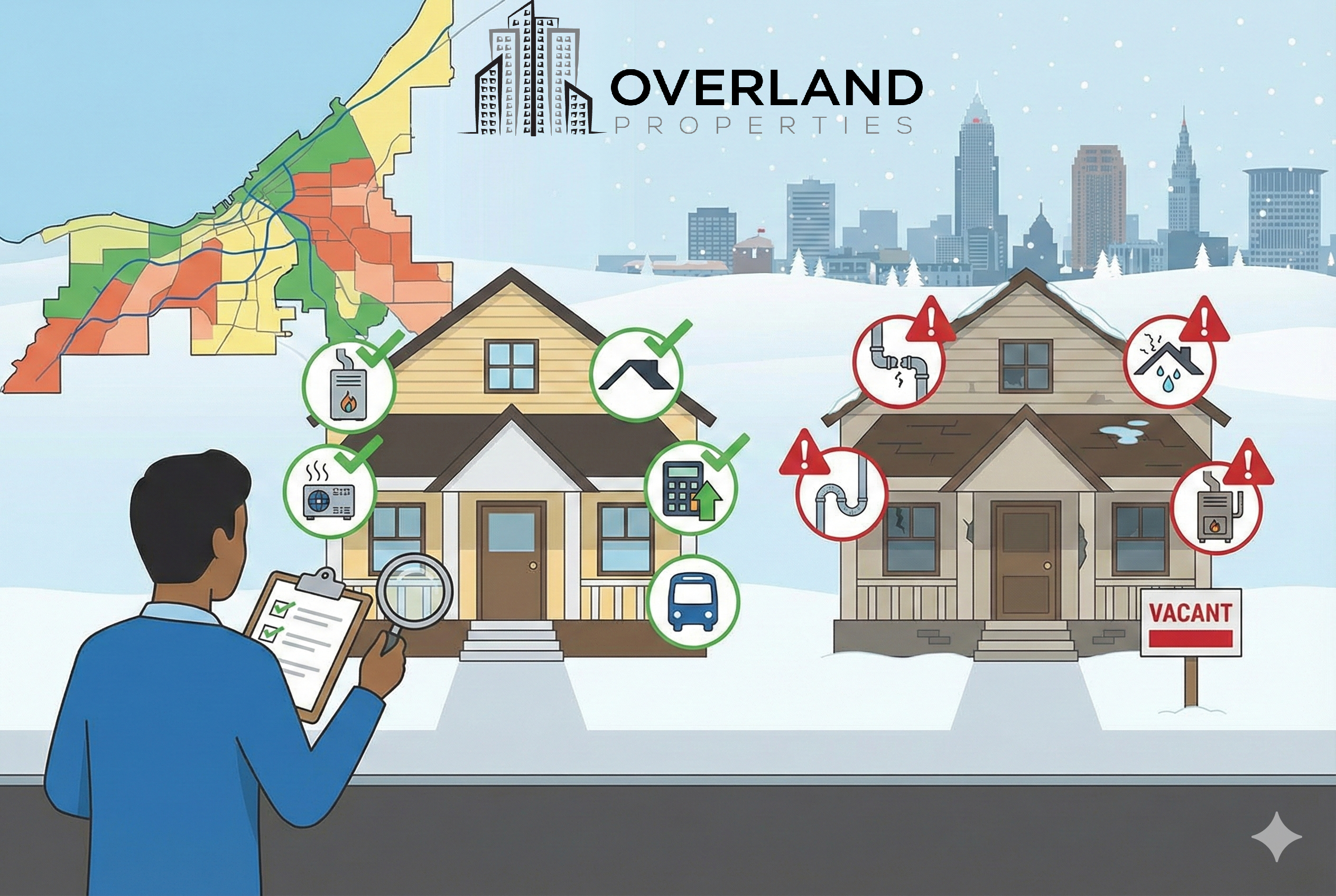
Some rental properties glow with potential the second you walk in. Others feel promising until you dig into the numbers and realize the “amazing opportunity” is actually a monthly donation to your future headaches fund. Cleveland has plenty of both. The trick, as always, is knowing how to evaluate rental properties before the excitement of a possible deal clouds your judgment….
This guide breaks down the signals that matter most when deciding whether a home or multi-unit will actually perform. No hype. No glossy sales talk. Just grounded Cleveland real estate tips shaped by what actually works in this market.
Look At The Neighborhood First, Not The Paint Color
Cleveland is a city of micro-markets.
You can stand on one corner and get a completely different rental experience than the block across from it. That is why Cleveland rental property investment always starts with a location check before you even bother poking at faucets or testing outlets.
Pay attention to:
- tenant demographics
- turnover patterns
- school performance
- access to transit or major employers
- signs of ongoing investment
If the neighborhood shows stability, gradual improvement, or a healthy renter population, that is already a green flag.
What you are trying to avoid is buying a house that looks updated but sits in an area where renters rarely stay longer than a year.
And if you are seeing younger renters or remote workers in the area, it might align with broader trends, similar to places experiencing shifting preferences like what renters really want in Cleveland neighborhoods. These clues often predict whether a property stays occupied or struggles during winter slowdowns.
Evaluate The Numbers Before Falling In Love With The Property
It is unbelievably easy to get emotionally attached to a house when you like the layout or you picture it fully renovated. That is when bad decisions happen. The numbers must come first.
Here is how to evaluate rental properties without guesswork:
- estimate realistic rent based on comps
- subtract vacancies, not ideal but honest ones
- calculate all annual maintenance
- include insurance, taxes, and utilities if applicable
- run cap rate and cash flow scenarios
- assume at least one unexpected repair per year
Cleveland taxes vary more than people expect, and older properties often hide costly improvements behind fresh cosmetic work. A rental property should still cash flow even after you subtract the “hidden” costs.
Knowing where the math can fall apart is one of the most valuable Cleveland real estate tips landlords learn the hard way. Better to learn it before signing anything.
Study The Property’s Mechanical Health
Cleveland winters test every system in a building. Furnaces run nonstop. Water lines freeze in places you did not even know existed. Roofs bear lake effect snow that feels heavier each year.
Before you buy, check:
- age of the roof
- furnace condition and service history
- electrical panel upgrades
- plumbing material (galvanized pipes can derail entire budgets)
- signs of moisture in the basement
This is where property inspections reveal more than listing photos ever will. A home with good bones and updated systems is worth far more long-term than a freshly painted one with a 25-year-old furnace.
And small sustainability upgrades like insulation or efficient fixtures also relate to broader conversations about eco-friendly improvements that attract better tenants across the city.
Check Local Rent Demand Without Overthinking It
You do not need a crystal ball to understand demand. Just check a few simple things:
- how long rentals sit on the market in that neighborhood
- whether average rents are rising, holding, or slipping
- how many units nearby offer similar layouts
- the tenant type that property attracts
Cleveland has a surprisingly strong renter base, driven partly by affordability, partly by lifestyle changes, and partly by outside investor activity. Some pockets attract long-term stable tenants. Others act more like transition zones.
If the area pulls steady interest year after year, that is usually a strong sign the property will perform. This is also where insights about out-of-state investor competition can be useful, since those investors often target the highest-demand pockets first.
Look Beyond The House Itself
High-performing rentals have something in common: they make life convenient. Not luxurious. Convenient.
That can include:
- walkability to groceries or pharmacies
- nearby public transit
- access to parks
- short commute to universities or major employers
- safe-feeling blocks, even during winter evenings
These influence tenant retention more than landlords expect. A well-maintained but poorly located rental can sit vacant, while an average unit in a well-loved neighborhood stays full.
This is especially true in popular areas like Tremont, Detroit-Shoreway, Old Brooklyn, and parts of Lakewood. Renters gravitate to places that feel lived-in and evolving.
Analyze The Seller’s Motivation And The Property’s History

Some properties perform well because past owners took care of them. Others are being sold because the previous landlord got overwhelmed by maintenance costs or tenant turnover.
Ask for:
- repair receipts
- prior rent amounts
- utility bill averages
- notes on recurring issues
- vacancy history
A high-performing rental usually shows predictable patterns. Nothing dramatic. Nothing chaotic. If the story of the property feels inconsistent, trust that instinct. It might be warning you.
Check For Improvements That Matter (And Skip The Ones That Don’t)
Investors sometimes fall for pretty upgrades that mean nothing for long-term performance. Stainless steel appliances are nice but do not fix old plumbing. Granite countertops do not stop heat loss from drafty windows.
Focus on improvements that increase durability, reduce maintenance calls, or help tenants stay comfortable through Cleveland winters.
These usually include:
- newer windows
- updated HVAC
- waterproofed basements
- modern electrical
- solid flooring
- insulated attics
These improvements reduce headaches and often attract the kind of renters who stay longer, pay on time, and care about the property.
Decide If The Property Fits Your Long-Term Strategy
Not every deal is a match for every investor. You might want stable, long-term cash flow. Or you might want appreciation potential depending on the neighborhood’s trajectory. Some investors prefer multi-family buildings with predictable turnover. Others want single-family rentals where families tend to settle in.
Understanding your own strategy is part of what makes Cleveland rental property investment successful. Buying a property that feels wrong for your strengths usually leads to burnout.
And if you end up trekking toward multi-unit ownership, it often aligns with larger discussions around investing in duplexes and small multi-family homes for long-term returns in the Cleveland market.
A Quick Cleveland Due Diligence Checklist
Before you decide:
- evaluate the neighborhood for stability and renter demand
- verify mechanical systems and structural health
- run cash flow and cap rate numbers with honest assumptions
- review property history and repairs
- walk the street during different times of day
- compare the property to others within a few blocks
- estimate renovation needs with real contractor prices, not hopeful ones
Good properties stand up to scrutiny. The ones that collapse under basic questions are not the ones you want.
Final Thoughts
Spotting a high-performing Cleveland rental takes patience, a little skepticism, and a willingness to ignore pretty finishes. Focus on the numbers, the systems, the neighborhood, and the long-term demand. When all four line up, that is usually your sign you are standing in front of a winner.
If you ever want a second set of eyes on a potential property or need help managing the one you already have, we’re here to make the process easier. At Overland Properties, we help Cleveland investors find rentals that actually perform and stay profitable long after the purchase. Reach out anytime if you want guidance, support, or just a clearer path forward.
FAQ
How do you evaluate a rental property’s potential in Cleveland?
A: Focus on rent demand, neighborhood stability, property condition, and realistic cash flow projections before buying.
What makes a Cleveland rental property high-performing?
A: Strong tenant demand, updated mechanical systems, predictable maintenance costs, and a location renters actually want.
Why is neighborhood analysis so important for Cleveland investments?
A: Cleveland’s micro-markets vary widely. One block may see stable renters while the next struggles with turnover, so location drives performance.
What mechanical issues should investors check before buying?
A: Inspect the roof, furnace, plumbing, electrical panel, and basement moisture levels. Winter exposes weak systems quickly in Cleveland.
How do I know if a rental will attract long-term tenants?
A: Look for walkability, transit access, updated systems, and nearby employers. These features support stability and reduce vacancy risk.