
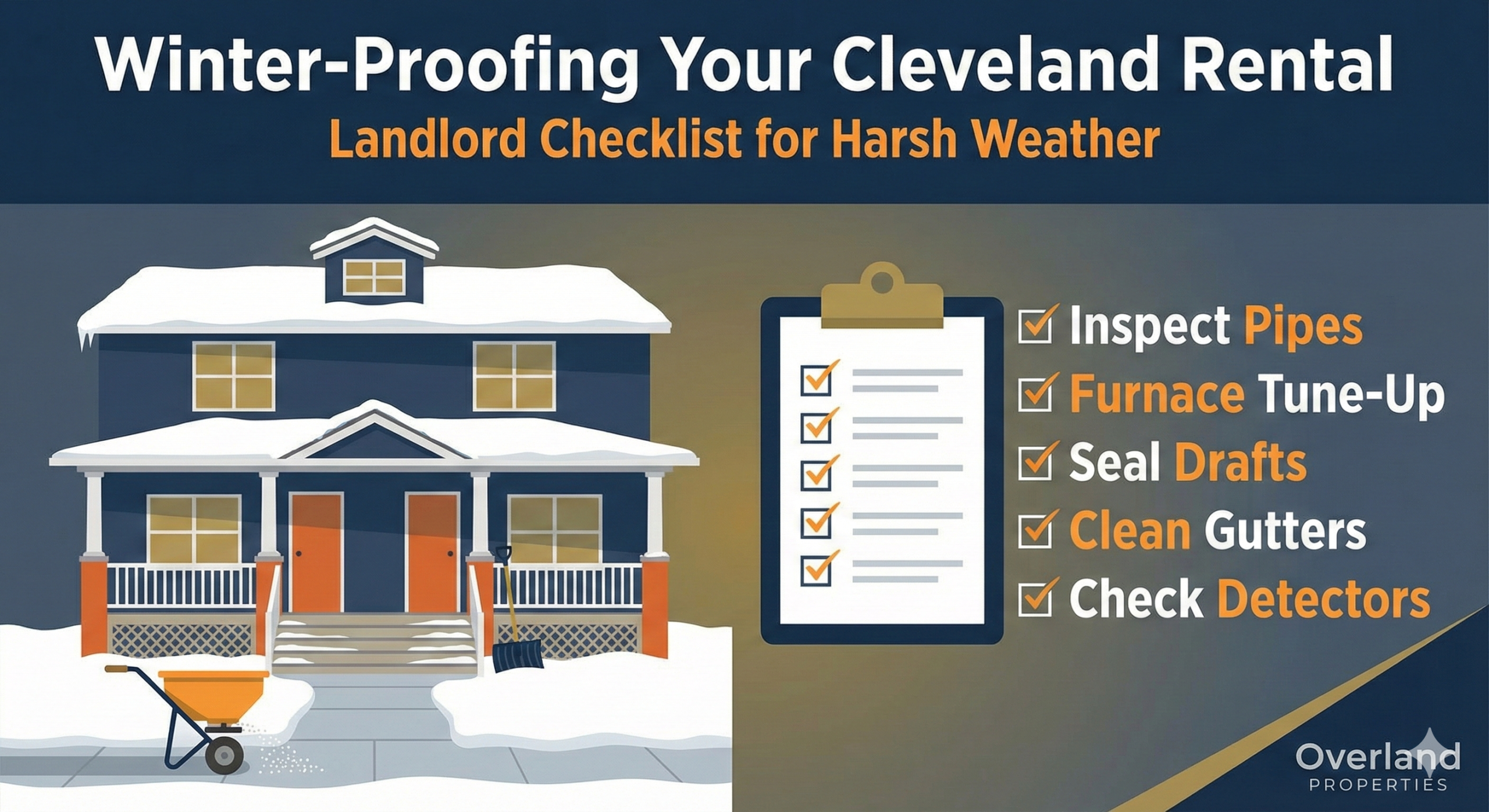
Cleveland winters have a personality. Some days feel manageable. Others feel like the wind is personally offended by your existence. Rental properties feel that too, even when everything “looked fine” a few weeks earlier.
That is why winterizing a rental property in Northeast Ohio is less of a suggestion and more of a requirement. Tenants expect warmth and stability. You expect fewer emergencies at midnight. And everyone wants predictable costs. The good news is that a little planning usually prevents the disasters that swallow up repair budgets every January.
This checklist breaks things down into practical steps that work whether you manage one duplex or a small portfolio. Think of it as a grounded, slightly cautious, but still optimistic approach to Cleveland rental maintenance during the cold season.
Along the way, you will see references to topics that Cleveland landlords keep asking about, like what renters really want in Cleveland neighborhoods, why the local regulations are tightening, and why more out-of-state investors are suddenly looking here. These work as natural anchors you can later use for deeper internal links.
Let’s get things wrapped up before Lake Erie decides to throw a fit again.
Inspect And Protect All Water Lines
Frozen pipes are the classic winter villain. They cost time, money, and sometimes parts of your sanity. A full pre-winter plumbing walkthrough is one of the simplest forms of Cleveland rental maintenance, yet also the one landlords skip most often.
Look at exposed pipes in basements, crawl spaces, garages, and older duplexes that have seen “better insulation days”. Foam sleeves help, but so does checking for cold drafts around entry points. Some owners also use low level heat tape in problem spots. It is not glamorous work, but avoiding a $6,000 pipe burst is usually its own reward.
This is also where property managers can help. They already know the buildings that behave badly when temperatures go negative. A seasoned manager can usually predict the weak points by memory, which removes a lot of the guesswork.
Make Sure Heating Systems Can Handle That Lake Effect Chill
Cleveland furnaces get no real break between November and March.
A tune up early in the season reduces risk of breakdowns and improves energy efficiency, something tenants appreciate more than they admit. A professional HVAC check usually includes cleaning the burners, checking for cracks, inspecting the blower, and making sure carbon monoxide risks are off the table.
If you notice your tenants using space heaters, it may signal uneven heating. That sometimes ties into insulation problems or outdated windows. It also creates safety concerns that are easier to prevent than monitor.
This is also a natural place to fold in winterizing rental property habits like checking thermostat functionality and swapping old filters. Not huge tasks, but very real when the weather suddenly drops twenty degrees in a day.
Seal Air Leaks Before the Bills Get Ugly
Even newer Cleveland rentals bleed heat through tiny gaps around windows and doors.
Drafts sneak in, bills climb, and tenants start sending emails that start with “just wondering if…”. A few quiet hours with weather stripping, caulk, and a smoke pencil usually solves most of these issues.
Also pay attention to attic insulation. Many Cleveland homes built before the 1990s never got proper insulation upgrades. Small improvements here produce bigger returns than people expect. They also support long term tenant satisfaction, which blends nicely with market insights like how eco friendly upgrades attract more Cleveland tenants.
Clean Gutters And Check For Ice Dam Risk
Gutters look harmless until they clog at the wrong moment. Meltwater backs up and refreezes at the roof edge, creating ice dams that push water under shingles. Eventually that water finds a ceiling or a wall. Both are expensive.
Schedule gutter cleanouts before heavy snow arrives. If the roofline tends to collect ice every winter, consider heat cables. They are not perfect, yet they prevent the worst cases. Tenants never think about gutters, but they do notice water stains or indoor leaks.
Protect Exterior Areas And Common Spaces
Sidewalk slips are a winter lawsuit waiting to happen. Stock up on salt or pet friendly deicer ahead of time. Make sure shovels and snow blowers actually work. If you rely on a snow removal company, confirm the contract before the first storm, not after.
Lighting also matters. Winter brings long, dark evenings. Updating motion lights or installing brighter bulbs in shared spaces improves safety more than landlords sometimes realize. It also ties into broader conversations about what renters want in Cleveland neighborhoods and why small upgrades make a big difference.
Double Check Ventilation And Indoor Air Quality
Cold weather sends everyone indoors.
Cooking, showers, and indoor activities create moisture that needs an exit path. Check bathroom fans, kitchen vents, and basement dehumidifiers. Mold grows quietly in winter, especially in older Cleveland duplexes with limited ventilation.
If the property has fireplaces, ensure they are cleaned and functional. Chimneys should be inspected, even if tenants say they “never use them”. People tend to change their minds in February.
Property managers often catch these issues early because they handle more unit inspections. Their seasonal checklists are usually stricter than what DIY owners use, which cuts down on surprises.
Test Safety Devices Before It Gets Too Cold To Ignore Them
Smoke detectors and carbon monoxide detectors need working batteries and placement in the right areas.
Winter increases these risks because heating systems run longer. Make testing part of your annual winterizing routine.
It is also wise to stock a few spare detectors in case tenants report chirping at night. Replacing them quickly avoids frustration on both sides.
Think About Tenant Needs Before They Become Problems
Some tenants grow nervous during winter, especially if they are new to the city. Providing a simple winter expectations guide works surprisingly well. Include details like:
- how quickly snow removal happens
- where to find furnace filters
- what to do if the heat stops
- reminders to keep thermostats at safe temperatures during travel
It shows organization, reduces stress, and builds trust. A clear guide helps even more if you attract renters similar to the groups shaping Cleveland’s growing millennial and Gen Z demand.
Plan For Emergencies Like You Expect Them
Keep a winter emergency supply in every unit. Flashlights, batteries, and basic first aid items never hurt. Also confirm that you or a property manager are reachable for legitimate emergencies. Snowstorms tilt things quickly, and responsiveness matters.
A lot of out-of-state investors underestimate winter response times here, which is why local knowledge matters. This is where conversations about how outside investors can compete in the Cleveland rental market become relevant. Understanding weather impacts is part of the overall strategy.

When To Bring In Professionals
DIY efficiency is great until it accidentally costs more. If a furnace makes strange noises, a pipe is slow to drain, or insulation looks questionable, calling a professional is usually cheaper than gambling on a guess.
This is also the point where many landlords lean on property managers. They can coordinate HVAC teams, plumbers, snow removal crews, and emergency repairs in ways individual owners cannot always do quickly. Not because owners are careless, but because winter gives you very little time to react.
A Practical Winter Checklist For Cleveland Landlords
Use this as a simple rundown you can follow every November.
- Inspect and insulate all exposed pipes
- Schedule a furnace tune up
- Replace filters and test thermostats
- Seal leaks around windows and doors
- Confirm attic insulation levels
- Clean gutters before the first freeze
- Verify snow removal plans and supplies
- Improve exterior and shared space lighting
- Test smoke and carbon monoxide detectors
- Check ventilation systems
- Provide tenants a winter expectations guide
- Prepare an emergency plan with contact info
Keeping things predictable is the real goal. Winter will still be winter, unpredictable and sometimes dramatic, yet the property itself should stay steady.
If you ever feel that winter prep takes more energy than it should, we can help. At Overland Properties, we help Cleveland landlords stay ready long before the cold hits. Our team handles seasonal maintenance, inspections, repairs, and the small winter headaches that pile up over time.
Reach out anytime. We are here to keep things running smoothly, even on the coldest days.
FAQ
How early should landlords start winterizing a Cleveland rental property?
A: Start in early fall. Weather shifts quickly, and early prep ensures pipes, heating systems, and insulation are ready before the first freeze.
What maintenance tasks matter most for Cleveland’s harsh winters?
A: Heating system checks, pipe insulation, gutter cleaning, sealing drafts, and verifying snow removal plans are essential parts of Cleveland rental maintenance.
How can landlords prevent frozen pipes in older Cleveland homes?
A: Use insulation sleeves on exposed pipes, seal drafts, maintain steady indoor temperatures, and educate tenants about preventing extreme temperature drops.
Why does attic insulation matter so much in cold climates?
A: Poor insulation causes heat loss, high energy bills, and uneven room temperatures. Upgrades support winterizing rental property and long term tenant comfort.
Should landlords hire property managers for winter maintenance?
A: Many do. Property managers can handle inspections, emergency repairs, snow removal coordination, and ongoing Cleveland rental maintenance more efficiently than DIY owners.