
December tends to compress everything.
Maintenance decisions that were postponed. Rent increases that felt minor at the time. Vacancy gaps that seemed reasonable month to month. By the time the year is ending, those choices have quietly stacked on top of each other.
For Cleveland rental owners, the final weeks of the year are less about wrapping things up neatly and more about understanding what actually happened. Not in a dramatic way. Just honestly.
A year-end rental property review is not about finding fault. It is about spotting patterns before they repeat themselves. And they usually do.
Below are the areas worth reviewing before closing the books and mentally moving on to January.
Rental Income vs. Real Cash Flow
This is where the story usually changes.
Gross rent numbers can look fine while cash flow feels tight. That disconnect often comes down to timing rather than totals.
Late payments. Short vacancies. Expenses hitting earlier than expected. All of that affects rental property cash flow analysis more than most owners realize.
Before the year ends, it helps to look at:
- When rent actually arrived, not just whether it arrived
- Months where expenses consistently outpaced income
- How often cash reserves were tapped unexpectedly
In Cleveland rental property management, these patterns matter because seasonal slowdowns are predictable. If cash flow felt uneven this year, it is usually pointing to a system issue, not a one-off problem.
Vacancy Time That Quietly Added Up
Vacancy has a way of feeling invisible until it is totaled.
A week here. Ten days there. A longer gap waiting for repairs or showings. None of it feels alarming in isolation. Over a year, though, vacancy often becomes one of the biggest silent costs.
During a year-end rental property review, look at:
- Average days vacant between tenants
- Which listings leased quickly and which lingered
- Whether pricing, condition, or marketing slowed things down
For Cleveland rentals, vacancy timing matters just as much as vacancy length. An empty unit in late fall or winter carries more weight than one in peak leasing season. Owners who track this closely often adjust marketing or maintenance timing the following year.
This is also where structured Cleveland rental property management tends to reduce friction. Not by eliminating vacancy entirely, but by shortening it consistently.
Maintenance Costs vs. Maintenance Behavior
Maintenance numbers alone rarely tell the full story.
Two properties can spend the same amount annually while having very different experiences. The difference is usually timing.
Review:
- How much maintenance was reactive versus planned
- Which repairs appeared more than once
- Whether small issues escalated into emergency calls
Deferred maintenance often feels reasonable in the moment. Especially during busy stretches. Over time, though, it tends to show up as higher costs, more tenant frustration, and less predictability.
A thoughtful year-end rental property review often leads owners to rethink preventive maintenance schedules. Not because repairs disappear, but because emergencies become less frequent and easier to manage.
Tenant Turnover and Retention Patterns
Turnover is not always bad. But unexamined turnover usually is.
Before closing the year, consider:
- How many tenants moved out
- How many renewals were offered and accepted
- Common reasons tenants gave for leaving
Cleveland renters are increasingly sensitive to responsiveness and clarity. When turnover feels higher than expected, it is often tied to communication gaps or unresolved maintenance rather than rent alone.
Understanding tenant behavior helps inform pricing decisions, upgrade priorities, and lease strategies for the coming year. It also clarifies whether the property is attracting the type of long-term renters owners actually want.
Rent Adjustments That Worked and Those That Didn’t
Rent increases tend to get simplified into a yes-or-no decision.
In reality, outcomes vary.
Look back at:
- Rent increases that resulted in smooth renewals
- Increases that led to extended vacancy or turnover
- Units where rent stayed flat but performance improved
Rental property cash flow analysis improves when pricing decisions are reviewed alongside retention and vacancy, not in isolation. Real Estate Online resources can also help owners research current market trends and compare rental pricing before making adjustments.
There is no single correct approach. Just clearer trade-offs once the data is reviewed.
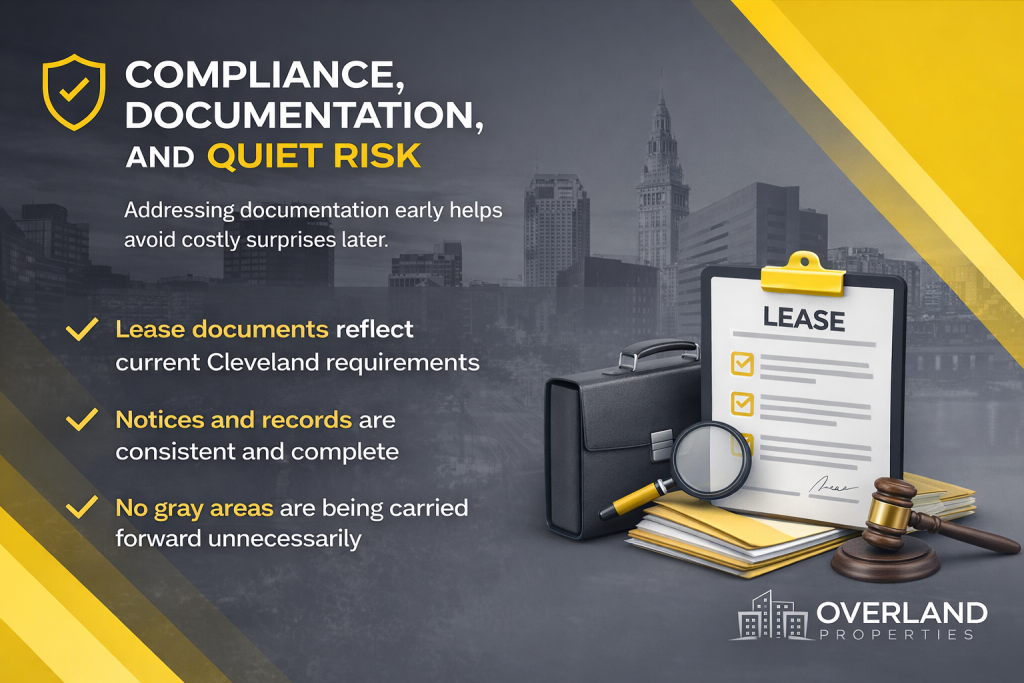
Compliance, Documentation, and Quiet Risk
Compliance issues rarely announce themselves early.
Lease language. Notice timelines. Local requirements. These details often feel administrative until something goes wrong.
As part of a year-end rental property review, owners benefit from confirming that:
- Lease documents reflect current Cleveland requirements
- Notices and records are consistent and complete
- No gray areas are being carried forward unnecessarily
Cleveland rental property management has become more detail-driven over time. Owners who address documentation and compliance proactively tend to face fewer surprises later, especially during tenant transitions.
Time Spent Managing vs. Value Gained
This review is less numerical, but often the most telling.
How much personal time went into managing the rental this year? And did that time feel proportional to the return?
Coordinating vendors. Following up on payments. Responding to late-night messages. These tasks are manageable, until they start crowding out other priorities.
Some owners prefer staying hands-on. Others realize that their time has become the most expensive line item. That is often when conversations about Cleveland rental property management shift from curiosity to practicality.
Not as a sales decision. As a time and consistency decision.
Closing the Year With Fewer Assumptions
The purpose of this review is not to tidy everything up before December 31.
It is to carry fewer assumptions into the next year.
Strong years still have weak spots. Frustrating years still offer useful clarity. Cleveland rental owners who take time to review cash flow, vacancy, maintenance patterns, and tenant behavior before the year ends usually start January with more control and less guesswork.
If part of that reflection raises questions about systems, support, or long-term strategy, those questions are worth exploring early.
At Overland Properties, we work with owners who want clearer oversight, steadier performance, and fewer surprises from their rental investments. If that sounds like the direction you are heading, we would be glad to look at the year together and talk through next steps as a team.
FAQs
1. What should be included in a year-end rental property review?
A: Cash flow timing, vacancy patterns, maintenance behavior, tenant turnover, and compliance details.
2. Why is rental property cash flow analysis important at year-end?
A: Because it reveals timing issues that annual totals often hide.
3. How does vacancy affect Cleveland rental performance?
A: Seasonal vacancy can impact income more than owners expect, especially during colder months.
4. Is preventive maintenance worth reviewing annually?
A: Yes. Patterns often show whether delays led to higher costs or tenant dissatisfaction.
5. When should owners consider Cleveland rental property management services?
A: Usually when time demands, inconsistency, or stress begin outweighing the benefits of self-management.